SCNTP™ · a Panacea Bio Chem research programme
Somatic Cell Nuclear Transfer: Teaching a Grown Cell to Be Young Again
The short answer. Somatic cell nuclear transfer (SCNT) moves the nucleus of an ordinary adult body cell into an egg cell whose own nucleus has been removed; the egg's cytoplasm then resets that adult nucleus to the very beginning of development[2][14]. Its sister technique, induced pluripotent stem cells (iPSCs), reaches the same reset with four defined genes and no egg at all[8][9]. Together they established the defining discovery of modern cell biology — that differentiation is not a one-way street — and that discovery took the 2012 Nobel Prize in Physiology or Medicine[24].
The evidence in one view
1962
John Gurdon clones a frog from the nucleus of an adult intestinal cell — the first proof that a specialized cell still carries the whole instruction set.[1]
Established · animal1997
Dolly the sheep is born at the Roslin Institute — the first mammal cloned from an adult cell.[2]
Established · animal2013
Human embryonic stem-cell lines are derived by SCNT for the first time, in Oregon.[14]
Human cells · in vitro2017
First human transplant of iPSC-derived cells: retinal sheets for macular degeneration, RIKEN Kobe.[17]
Human evidence2018
Zhong Zhong and Hua Hua — the first cloned primates, born in Shanghai by SCNT.[19]
Animal · primateSixty-four years of starting over
Every cell in your body carries the same genome it carried on the day you were conceived. A skin cell and a neuron differ not in what they carry, but in what they remember to switch on. The story of SCNT is the story of learning how to erase that memory — and of what that erasure promises for youthfulness, repair, and hope.
- 1962 · Oxford, United Kingdom
John Gurdon transfers the nucleus of an intestinal cell from a feeding tadpole into an enucleated frog egg — and the egg develops. Developmental biology's founding assumption, that differentiation must lock genes away forever, is gone.[1]
- 1996–1997 · Roslin, Scotland
Ian Wilmut's team applies the same logic to a mammal: an adult sheep's mammary cell nucleus, an enucleated egg, and in July 1996 a lamb — Dolly — whose existence established that an adult mammalian nucleus can direct a whole new life.[2]
- 1999 · the telomere question
An analysis of cloned sheep reports shortened telomeres — the chromosome caps associated with cellular ageing — and the field asks whether a reset nucleus carries its donor's years.[3] Seventeen years later, a study of thirteen aged cloned sheep finds them ageing healthily: the reset, when it works, is real.[4]
- 2003 · why primates resisted
Calvin Simerly's group in Pittsburgh shows that primate eggs scatter the spindle proteins a transferred nucleus needs — a molecular reason monkeys would not clone by the methods that worked in sheep.[5]
- 2004–2006 · the lesson the field paid for
Seoul reports human embryonic stem cells from cloned blastocysts, then patient-specific lines — the most celebrated result the field had ever seen. Both papers are retracted in January 2006 after the data are shown to be fabricated.[6][7] The field's answer was structural, not rhetorical: independent DNA fingerprinting of every claimed line became the norm, visible in every genuine human SCNT paper since.[11][14]
- 2006–2007 · Kyoto and Madison
Shinya Yamanaka's laboratory shows that four transcription factors — Oct3/4, Sox2, Klf4, c-Myc — reprogram mouse fibroblasts into pluripotent stem cells[8], then human ones[9]; James Thomson's group in Wisconsin reaches human iPSCs within weeks, by a different factor set.[10] Reprogramming no longer needs an egg.
- 2007 · Oregon
Shoukhrat Mitalipov's team derives the first primate embryonic stem-cell lines by SCNT, from rhesus macaques — with DNA analysis confirming the nuclear genome came from the donor skin cell and the mitochondria from the egg.[11]
- 2012 · Stockholm
The Nobel Prize in Physiology or Medicine goes to Gurdon and Yamanaka, "for the discovery that mature cells can be reprogrammed to become pluripotent."[24]
- 2013–2014 · the human result, at last, for real
Oregon derives human embryonic stem-cell lines by SCNT — with premium oocytes, from as few as two eggs.[14] Within a year, adult donors work too: dermal fibroblasts from men aged 35 and 75 yield pluripotent lines[15], and a woman with type 1 diabetes sees her own nuclei reprogrammed to diploid pluripotent stem cells.[16]
- 2017 · Kobe, Japan
RIKEN surgeons transplant retinal pigment epithelium grown from a patient's own iPSCs into her eye — the first human use of cells made by reprogramming.[17]
- 2018 · Shanghai, China
The Institute of Neuroscience clones two long-tailed macaques by SCNT, using a histone-demethylase messenger RNA and a deacetylase inhibitor to lift the epigenetic barriers that blocked primate cloning for two decades.[19]
- 2025 · a horse named for the future
Two healthy Przewalski's horse foals are cloned from cells cryopreserved decades earlier from a stallion who died in 1998 — genetic variation recovered from a freezer, for a species that nearly vanished. The work joined teams in the United States, Russia, and the Czech Republic.[23]
The through-line, from Oxford to Shanghai: this field is global, patient, and self-correcting. Reviews written a quarter-century after Dolly — from groups in Italy, Poland, and the Czech Republic — still map how far the technique has to go.[20] Work from Russia's L. K. Ernst Federal Research Center and Utah State is among the recent efforts improving farm-animal SCNT outcomes.[22]
How a cell is reset: the two roads
Road one — nuclear transfer (SCNT)
An unfertilized egg is relieved of its own nucleus — enucleation. A body cell's nucleus is placed inside, and a pulse of activation persuades the egg it has been fertilized. The egg's cytoplasm contains factors that wipe the donor nucleus's epigenetic annotations — the methyl marks and histone states that made it a skin cell or a mammary cell — and drive it back toward totipotency.[18] The reconstructed embryo can go two ways: transferred to a surrogate, it may become an organism (reproductive cloning, as with Dolly[2]); grown only to the blastocyst stage in a dish, it yields embryonic stem cells genetically matched to the donor (therapeutic cloning — the 2013 human result[14]).
Two inheritances matter. The mitochondria in an SCNT embryo come from the egg donor, not the nucleus donor — verified by DNA analysis in both primate and conservation cloning.[11][23] And the reset is rarely complete: cloned embryos often retain epigenetic "memory" of the donor cell type, a phenomenon also mapped in iPSCs.[12][13]
Road two — induced pluripotency (iPSC)
No egg, no embryo. Four defined factors, delivered to ordinary cells, switch on the pluripotency network directly.[8][9] iPSCs carry the patient's exact genome — mitochondria included — which is why they, and not SCNT lines, have so far led the march into the clinic.[17]
What is known, by class of evidence
- Established
- Adult-cell nuclear transfer can produce a viable mammal[2]; four defined factors reprogram mouse and human cells to pluripotency[8][9][10]; human pluripotent stem-cell lines have been derived by SCNT[14][15][16].
- Human evidence
- Reprogrammed cells have entered patients: autologous iPSC-derived retinal cells transplanted for macular degeneration, reported in 2017.[17] No SCNT-derived cell product has been administered in a published clinical report as of September 2026.
- Animal evidence
- Cloned primates (macaques)[19], primate SCNT stem-cell lines[11], cloned livestock[20][22], and healthy clones of an endangered horse from decades-frozen cells.[23]
- In vitro
- Human NT-ESC derivation and its optimization[14][15]; epigenetic memory in reprogrammed cells.[12][13]
- Hypothesis
- That protocol engineering and chemistry can bring patient-matched pluripotent cells within ordinary budgets — the question the SCNTP™ programme exists to work on. It is a direction of work, not a result.
- Unknown
- Whether SCNT will ever match iPSC routes on cost and throughput; how completely epigenetic memory can be erased across a human lifespan of use[12][21]; whether conservation cloning scales to real genetic rescue.[23]
What the field learned the hard way
Efficiency is the honest bottleneck
Cloning works, but rarely on the first attempt. In the 2018 macaque study, fetal-cell SCNT produced six pregnancies in 21 surrogates and two healthy infants; adult-cell SCNT produced 22 pregnancies in 42 surrogates and two infants who did not survive long.[19] Reviews across farm animals still describe offspring rates as limited, a quarter-century after Dolly.[20][21] Anyone quoting a figure near certain success for this technology is not quoting the literature.
Memory outlives the reset — sometimes
Reprogrammed cells can retain traces of their former identity, in methylation patterns and in behaviour.[12][13] Dolly's shortened telomeres[3] proved not to be destiny — cloned sheep aged normally in later, larger studies[4] — but the question taught the field to measure, not assume.
The Hwang lesson
In 2004 and 2005, Seoul National University publications claimed the first human cloned-blastocyst stem-cell line and eleven patient-specific lines.[6][7] Both were retracted in January 2006; the data had been fabricated. The lasting consequence was not cynicism but method: DNA-verified provenance, openly reported donor numbers, and replication across independent laboratories — the culture within which the genuine 2007, 2013, and 2014 results were received.[11][14][15]
Governance drew the line early
The World Health Assembly, meeting at WHO headquarters in Geneva, passed resolutions in 1997 and 1998 affirming that cloning for the replication of human individuals is ethically unacceptable and contrary to human integrity — while leaving the door open to research on cloning's medical promise.[25] Therapeutic research under oversight is the road the field has travelled since.
Where Panacea stands
SCNTP™ — the Somatic Cell Nuclear Transfer Protocol — is Panacea Bio Chem's research programme built on one observation this page has made in the literature: the science of resetting cells is done; the economics are not. Oocytes are scarce, micromanipulation is artisanal, and efficiencies stay in single digits.[19][20] A protocol designed from the start for cost — paired with the company's peptide and formulation technology — is the road to patient-matched pluripotent cells that ordinary people can reach. That is the programme's direction of work, stated as such.
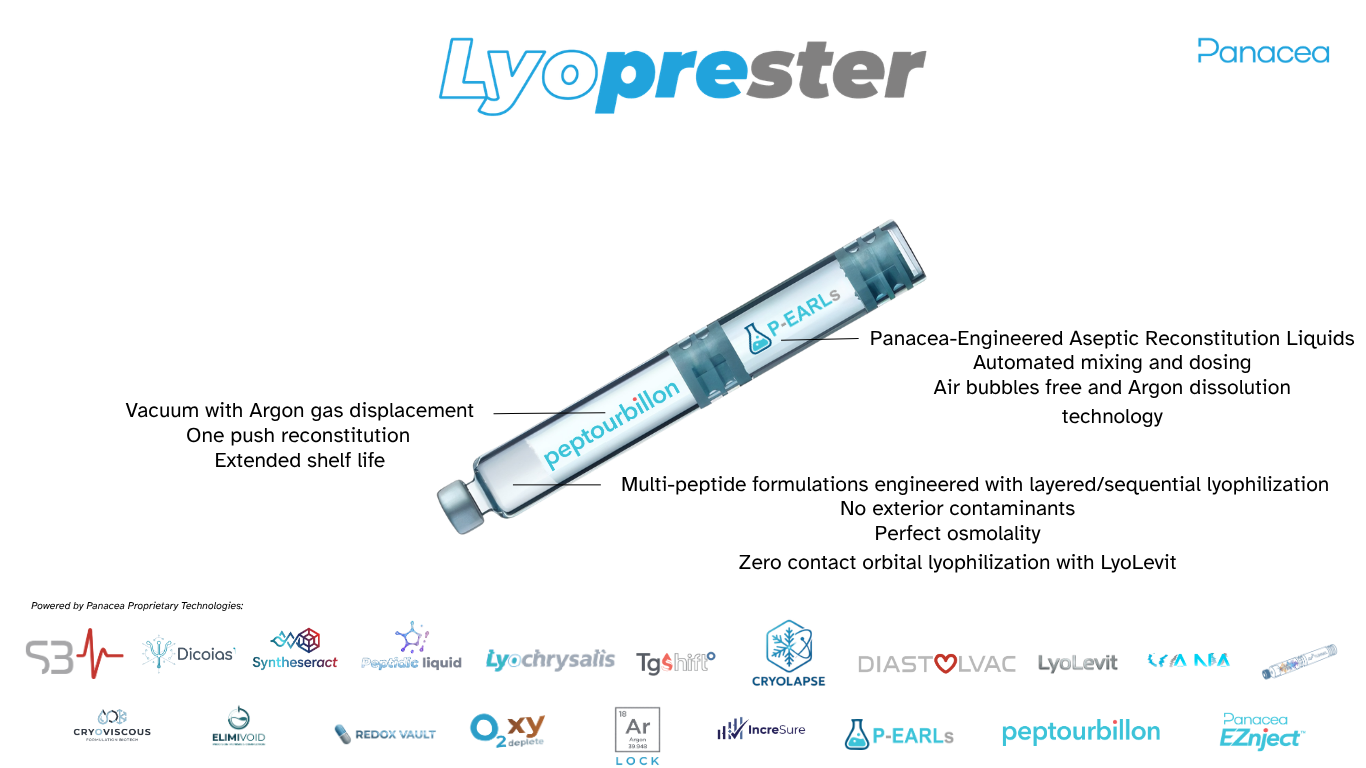
The Przewalski's horse foals make the second half of the case: cells cryopreserved from a stallion who died in 1998 became two healthy living clones a quarter-century later.[23] Preservation is half the discipline. Panacea's own preservation and formulation engineering — the Lyoprester® dual-chamber system and the wider Panacea Bio Chem lyophilization stack — exists for exactly the class of delicate biologicals that reprogrammed cells will be.
SCNTP™ is a proprietary Panacea Bio Chem programme developed and invented by Bogdan Dicoias. Its parameters are not publicly disclosed. Bogdan Dicoias is directly involved in this field through Biogenther, his Dominican Republic company — biogenther.com.

Questions people actually ask
What is somatic cell nuclear transfer, in one sentence?
How is SCNT different from iPSC reprogramming?
Has SCNT ever produced human stem cells?
Yes — in 2013, an Oregon team derived human embryonic stem-cell lines by SCNT, in some experiments from as few as two oocytes; in 2014 the feat was repeated with adult donors up to 75 years old and with cells from a patient with type 1 diabetes.[14][15][16] No SCNT-derived therapy is approved anywhere as of September 2026.
Why is cloning efficiency so low?
Is human reproductive cloning part of this field?
No. The World Health Assembly resolved in 1997 and 1998 that cloning to replicate human individuals is ethically unacceptable, and the research community's work since has been therapeutic: cells and tissues, not persons.[25] No cloned human has ever been verified in the scientific literature.
What is SCNTP™?
SCNTP™ — the Somatic Cell Nuclear Transfer Protocol — is Panacea Bio Chem's research programme on the cost problem of patient-matched pluripotent cells: protocol design, peptide and formulation technology, and preservation engineering aimed at affordability. It is a direction of work, presented as such; its parameters are proprietary and not publicly disclosed.
References
- Gurdon JB. The developmental capacity of nuclei taken from intestinal epithelium cells of feeding tadpoles. J Embryol Exp Morphol. 1962 Dec;10:622-40. PMID 13951335Established · animal
- Wilmut I, Schnieke AE, McWhir J, Kind AJ, Campbell KH. Viable offspring derived from fetal and adult mammalian cells. Nature. 1997;385(6619):810-3. PMID 9039911 · DOI 10.1038/385810a0Established · animal
- Shiels PG, Kind AJ, Campbell KH, et al. Analysis of telomere lengths in cloned sheep. Nature. 1999;399(6734):316-7. PMID 10360570Animal evidence
- Sinclair KD, Corr SA, Gutierrez CG, et al. Healthy ageing of cloned sheep. Nat Commun. 2016;7:12359. PMID 27459299Animal evidence
- Simerly C, Dominko T, Navara C, et al. Molecular correlates of primate nuclear transfer failures. Science. 2003;300(5617):297. PMID 12690191Animal · primate
- Hwang WS, Ryu YJ, Park JH, et al. Evidence of a pluripotent human embryonic stem cell line derived from a cloned blastocyst. Science. 2004;303(5664):1669-74. Retracted January 2006. PMID 14963337Retracted · the field's lesson
- Hwang WS, Roh SI, Lee BC, et al. Patient-specific embryonic stem cells derived from human SCNT blastocysts. Science. 2005;308(5729):1777-83. Retracted January 2006. PMID 15905366Retracted · the field's lesson
- Takahashi K, Yamanaka S. Induction of pluripotent stem cells from mouse embryonic and adult fibroblast cultures by defined factors. Cell. 2006;126(4):663-76. PMID 16904174Established · animal/in vitro
- Takahashi K, Tanabe K, Ohnuki M, et al. Induction of pluripotent stem cells from adult human fibroblasts by defined factors. Cell. 2007;131(5):861-72. PMID 18035408Established · human cells in vitro
- Yu J, Vodyanik MA, Smuga-Otto K, et al. Induced pluripotent stem cell lines derived from human somatic cells. Science. 2007;318(5858):1917-20. PMID 18029452Established · human cells in vitro
- Byrne JA, Pedersen DA, Clepper LL, et al. Producing primate embryonic stem cells by somatic cell nuclear transfer. Nature. 2007;450(7169):497-502. PMID 18004281Animal · primate
- Kim K, Doi A, Wen B, et al. Epigenetic memory in induced pluripotent stem cells. Nature. 2010;467(7313):285-90. PMID 20644535In vitro · animal
- Polo JM, Liu S, Figueroa ME, et al. Cell type of origin influences the molecular and functional properties of mouse induced pluripotent stem cells. Nat Biotechnol. 2010;28(8):848-55. PMID 20644536In vitro · animal
- Tachibana M, Amato P, Sparman M, et al. Human embryonic stem cells derived by somatic cell nuclear transfer. Cell. 2013;153(6):1228-38. PMID 23683578Human cells · in vitro
- Chung YG, Eum JH, Lee JE, et al. Human somatic cell nuclear transfer using adult cells. Cell Stem Cell. 2014;14(6):777-80. PMID 24746675Human cells · in vitro
- Yamada M, Johannesson B, Sagi I, et al. Human oocytes reprogram adult somatic nuclei of a type 1 diabetic to diploid pluripotent stem cells. Nature. 2014;510(7506):533-6. PMID 24776804Human cells · in vitro
- Mandai M, Watanabe A, Kurimoto Y, et al. Autologous induced stem-cell-derived retinal cells for macular degeneration. N Engl J Med. 2017;376(11):1038-1046. PMID 28296613 · DOI 10.1056/NEJMoa1608368Human evidence · iPSC
- Matoba S, Zhang Y. Somatic cell nuclear transfer reprogramming: mechanisms and applications. Cell Stem Cell. 2018;23(4):471-485. PMID 30033121Review
- Liu Z, Cai Y, Wang Y, et al. Cloning of macaque monkeys by somatic cell nuclear transfer. Cell. 2018;172(4):881-887.e7. PMID 29395327Animal · primate
- Loi P, Palazzese L, Scapolo PA, Fulka J, Fulka H, Czernik M. 25th anniversary of cloning by somatic-cell nuclear transfer. Reproduction. 2021;162(1):F33-F43. PMID 33666564Review
- Srirattana K, Kaneda M, Parnpai R. Strategies to improve the efficiency of somatic cell nuclear transfer. Int J Mol Sci. 2022;23(4):1969. PMID 35216087Review
- Keim J, Liu Y, Regouski M, et al. Cytokine supplemented maturation medium improved development to term following somatic cell nuclear transfer in cattle. Reprod Fertil Dev. 2023;35(11):575-588. PMID 37308165Animal
- Novak BJ, Ryder OA, Houck ML, et al. Endangered Przewalski's horse, Equus przewalskii, cloned from historically cryopreserved cells. Animals (Basel). 2025;15(5):613. PMID 40075896 · DOI 10.3390/ani15050613Animal · conservation
- The Nobel Prize in Physiology or Medicine 2012: Sir John B. Gurdon and Shinya Yamanaka, "for the discovery that mature cells can be reprogrammed to become pluripotent." nobelprize.orgAward record
- World Health Assembly. Ethical, scientific and social implications of cloning in human health — resolutions of 1997 and 1998. World Health Organization, Geneva. WHO IRIS 10665/79553 · WHO IRIS 10665/79804Governance